
3 Best Website Builders for Real Estate Businesses
Buyers discover projects online long before they visit a site. In 2026, your website is not an online brochure — it is your primary lead generation engine.
A high-performance real estate website must handle complex inventory, load instantly on mobile, and sync seamlessly with your CRM. If your platform fails at these tasks, you lose high-intent traffic to competitors with faster, smarter digital ecosystems.
Choosing the right platform is the first step toward building that ecosystem. Here are the three best website builders for real estate that we suggest to our clients at Insomniacs.
What Makes a Good Real Estate Website Builder?
Most of our clients come to us with distinct design requirements and complex feature needs. You need a platform that does more than look good on a desktop; you need one that handles the operational heavy lifting.
A builder must provide:
- SEO Capabilities: Can you optimize for hyper-local keywords?
- Listing Management: Can it handle complex, multi-city inventory?
- CRM Integration: Does it sync lead data automatically?
- Mobile Speed: Does it load under two seconds on a slow internet?
- Lead Capture: Does it support dynamic, high-conversion landing pages?
If a builder forces you to compromise on these features, your marketing ROI will suffer.
1. WordPress
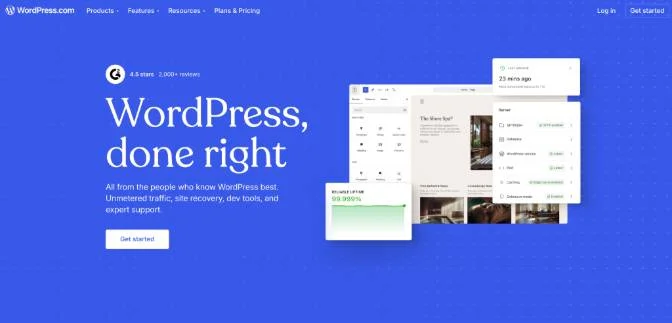
WordPress is the industry standard for serious real estate brands. It powers a large percentage of high-ranking property websites because it offers total control.
This website builder offers unmatched flexibility. With the right configuration, you can build a massive, SEO-optimized content hub that ranks for thousands of project-related keywords. It integrates with almost every CRM and third-party automation tool.
Real Insight
Most top-tier developers use WordPress because they need an architecture that scales. If you plan to publish regular market reports, neighborhood guides, and project updates, WordPress is the most logical choice.
Limitations
It is not "plug and play." You are responsible for security, hosting, and updates. If you overload your site with too many plugins, performance will drop. It requires a dedicated team or agency to maintain.
Best For
- Large developers
- Aggressive SEO-focused brands
- Enterprises with multi-city inventory
2. Wix
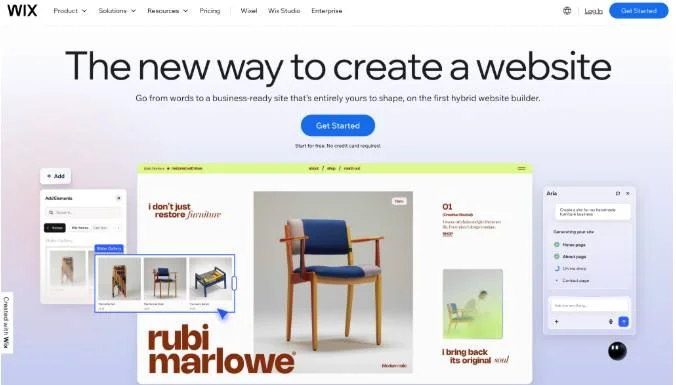
Wix is a visual-first builder that prioritizes speed and ease of use. It is excellent for businesses that need to get online quickly without hiring a development team.
It offers a drag-and-drop interface that makes design accessible. If you are a solo agent or a small brokerage, you can launch a professional, mobile-responsive site in a few days. The learning curve is minimal.
Real Insight
Wix is perfect for businesses prioritizing a quick presence over deep customization. It solves the "I need a website now" problem better than any other platform.
Limitations
Wix is less flexible for complex SEO and large-scale inventory management. As your property catalog grows, you may find the platform restrictive. It is difficult to migrate a massive Wix site to another platform later.
Best For
- Solo agents
- Small local brokers
- Temporary project microsites
3. Webflow
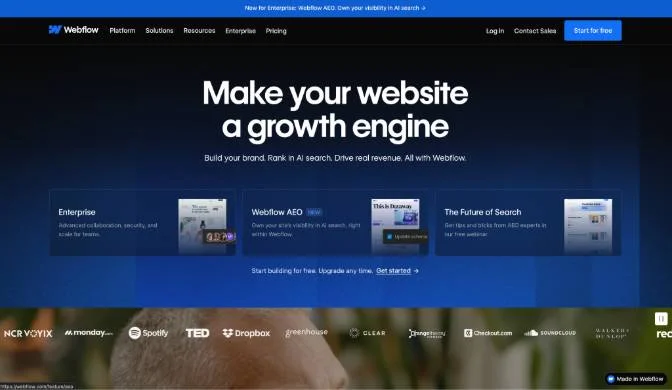
Webflow is the rising star for luxury real estate branding. It gives designers the power to build custom experiences without needing to write code.
The CMS is clean, and the ability to create custom interactions is industry-leading. If you are a luxury developer where the visual experience must match the high-ticket product, Webflow is a strong contender.
Real Insight
Luxury brands increasingly use Webflow to deliver cinematic, design-first experiences. It bridges the gap between a template-based site and a completely custom, code-heavy build.
Limitations
Webflow has a steep learning curve. While it is "no-code," it is not simple. As your data needs scale, you may eventually require a developer to manage advanced CMS configurations.
Best For
- Luxury developers
- Premium boutique projects
- Design-first marketing campaigns
When a Custom Real Estate Website Makes Sense
As your brand scales, you will eventually hit the "template wall." You may need advanced lead funnels, proprietary CRM integrations, or multi-language experiences that standard builders cannot support.
At this stage, generic website builders become a bottleneck. You need an integrated digital ecosystem.
Why Custom Solutions Matter?
Custom development allows you to build exactly what your sales process requires. You stop fighting the limitations of a plugin or a dashboard and start building tools that drive revenue.
Insomniacs helps growing real estate brands build these digital ecosystems. We combine custom web development with SEO, performance marketing, and automation to turn your website into a measurable sales channel.
We do not just build pages; we engineer conversion engines.
Finally, Which CMS is Best for You?
The best real estate website builder depends entirely on your current growth phase and marketing strategy.
If you are a solo agent, start simple. If you are a developer looking for search authority, prioritize WordPress. If your brand is a luxury statement, consider Webflow.
Regardless of the platform, remember this: your website is not just a digital brochure. It is a lead generation and marketing ecosystem. If you are ready to stop using templates and start scaling your digital presence, treat your website development as a strategic investment rather than a one-time expense.
Contact Insomniacs for a complete digital transformation of your real estate business, right from website creation to marketing campaigns and leads generation.